

Last Updated: October 30, 2026
Quick Summary
To buy eco friendly sleepwear online in Australia, choose 100% pure cotton over synthetic sets, because cotton breathes and moves moisture away from your skin. Check that the fibre content is stated clearly, size up for non-stretch cotton, and judge value by cost per wear rather than price tag.
- Cotton fibres are hollow and irregular, holding air pockets that let warm, moist air escape.
- For summer, pick a lightweight plain weave or single jersey over dense flannel or heavy interlock.
- Wash cotton pyjamas in cool water on a gentle cycle, inside out, and skip fabric softener.
- Line dry in shade, or use low heat and remove while slightly damp if you must tumble dry.
- Our men's cotton pyjama pants are $30.00, and orders ship from Melbourne.
Table of Contents
- Why Organic Cotton Sleepwear Beats a Cheap Synthetic Set
- Organic Cotton Pyjamas: What to Check Before You Add to Cart
- Breathable Pyjamas for Hot Sleepers and Sticky Summer Nights
- How to Care for Cotton Pyjamas So They Last Beyond One Season
- What You Actually Pay For, and How to Judge Value
- Ordering Your Sleepwear and Getting the Fit Right First Time
- Frequently Asked Questions
Why Organic Cotton Sleepwear Beats a Cheap Synthetic Set
If you want to buy eco friendly sleepwear online in Australia, the first decision that matters is fibre, not price tag. Synthetic sets can trap heat against your skin and hold onto moisture. Pure cotton behaves differently: the fibre breathes and moves moisture away from your skin. At Sleepy Koala Co, our pyjamas are made from 100% pure cotton, manufactured without harmful additives.
What the Certification Labels Actually Tell You
A label is only useful if you know what it certifies. When you buy eco friendly sleepwear online in Australia, it helps to check whether a brand names any certifying body and certificate number, and whether a claim covers the finished garment or just the raw fibre.
Organic Cotton Pyjamas: What to Check Before You Add to Cart
Four things decide whether a pair of cotton pyjamas is genuinely worth buying: fibre content, construction, fit allowance, and after-sale support. Fibre content should read as a single natural material rather than a blend padded out with synthetics. Construction matters more than most shoppers expect, because flat seams and a proper drawstring waist are what stop a garment from twisting or digging in overnight. Fit allowance is the one people get wrong most often. Pure cotton has no stretch, so a relaxed cut beats a snug one every time.
- Fibre content stated clearly, with no vague "cotton-rich" wording
- Sizing advice that accounts for non-stretch cotton
A common mistake is ordering your usual synthetic size and finding the waistband tight. Size up in pure cotton and you get the drape the fabric was designed for.
Breathable Pyjamas for Hot Sleepers and Sticky Summer Nights
Breathable pyjamas can make a difference for hot sleepers, and the reason is mechanical. Cotton fibres are hollow and slightly irregular, so a woven or knitted cotton fabric holds tiny pockets of air between the yarns. That structure lets warm, moist air escape instead of trapping it, and the fibre itself absorbs perspiration and wicks it away from your skin so you feel dry rather than clammy. Synthetic fabrics do the opposite: they are smooth, non-absorbent and often tightly knitted, so moisture sits against your skin and heat has nowhere to go. That is the 3am wake-up most hot sleepers know well.
Three fabric details decide how well a pair of cotton pyjamas performs on a humid night:
- Weave and knit. A plain weave or a lightweight single jersey lets more air through than a dense flannel or a heavy interlock. For summer, lighter is better; save the heavier cotton for cooler months.
- Fabric weight. Look for a lightweight cotton rather than a brushed or heavy finish. A lighter cloth moves air and dries faster, which matters most in sticky weather.
- Cut and coverage. A relaxed cut with a bit of room at the waist and thigh lets air circulate. A snug waistband or a tight leg traps heat exactly where you do not want it.
Fit and bedding work with the fabric, not against it. If you sleep hot and cold through the night, a relaxed cotton set you can push up at the sleeve and ankle gives you more control than a close-fitting one.
If you are weighing up which natural fibre suits your skin before committing, our guide to the best natural fibre pyjamas for sensitive skin walks through the options. For deeper advice on choosing cotton for muggy weather, read how to pick cotton pyjamas for humid nights, and if heat is your main enemy, these seven natural steps to sleep cooler are worth working through alongside your sleepwear choice.
How to Care for Cotton Pyjamas So They Last Beyond One Season
Care is where cheap sleepwear and good sleepwear separate, and it is also the area most shoppers get least guidance on. Cotton is a strong, forgiving fibre, but it responds badly to heat and to the wrong detergent. Get the routine right and a well-made pair will soften and improve for years instead of pilling by month three.
Men's Pyjama Pants - Blue White Chequered →
Washing. Wash cotton pyjamas in cool water on a gentle cycle, and turn them inside out first to protect the surface from friction. Use a mild detergent, and consider skipping fabric softener. Wash with similar colours and avoid overloading the machine, because crowding increases pilling and creasing.
Drying. Line dry in shade where you can. Direct sun breaks down cotton over time and fades colour, so a shaded line or a drying rack indoors is kinder. If you must use a dryer, choose a low heat setting and remove the garment while it is still slightly damp.
Repair before you replace. Most sleepwear failures are small and fixable. A loose button, a split seam or a worn drawstring channel can be repaired in minutes with a needle and thread, and a small patch on a thinning knee or seat extends life by a season or more.
Storage and end of life. Store clean, dry pyjamas folded rather than on a tight hanger, which stretches shoulders over time. When a garment is worn out, check your local council or a charity collection before binning it.
What You Actually Pay For, and How to Judge Value
Price on sleepwear is really a question of cost per wear. A cheap set that loses shape after a season costs more per night than a better-made pair that lasts several years, and that gap widens every time you replace the cheap one. We are a local company offering great products at a great price, and our men's cotton pyjama pants are $30.00. Judge value by seasons of wear, not by the number on the tag.
Ordering Your Sleepwear and Getting the Fit Right First Time
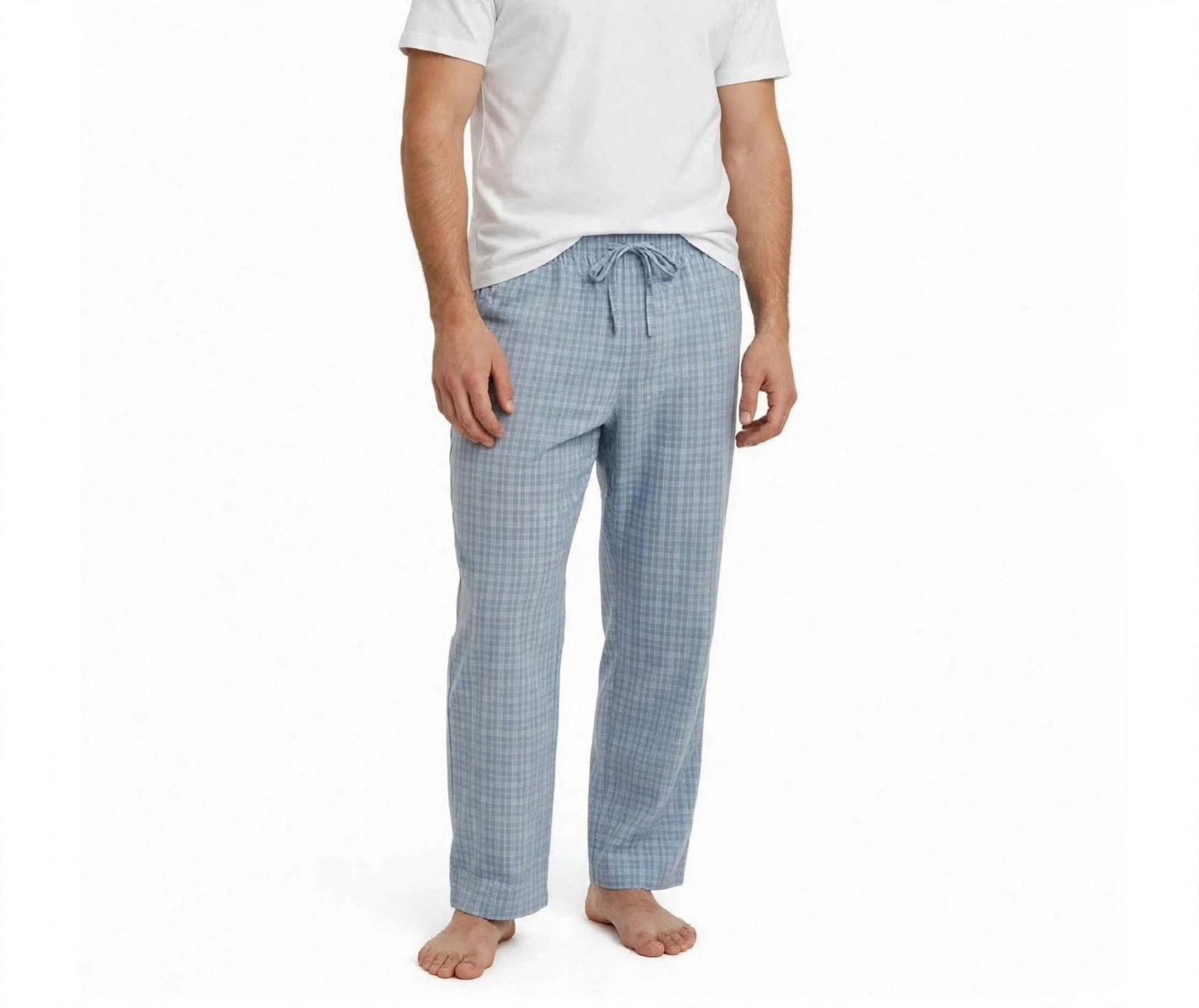
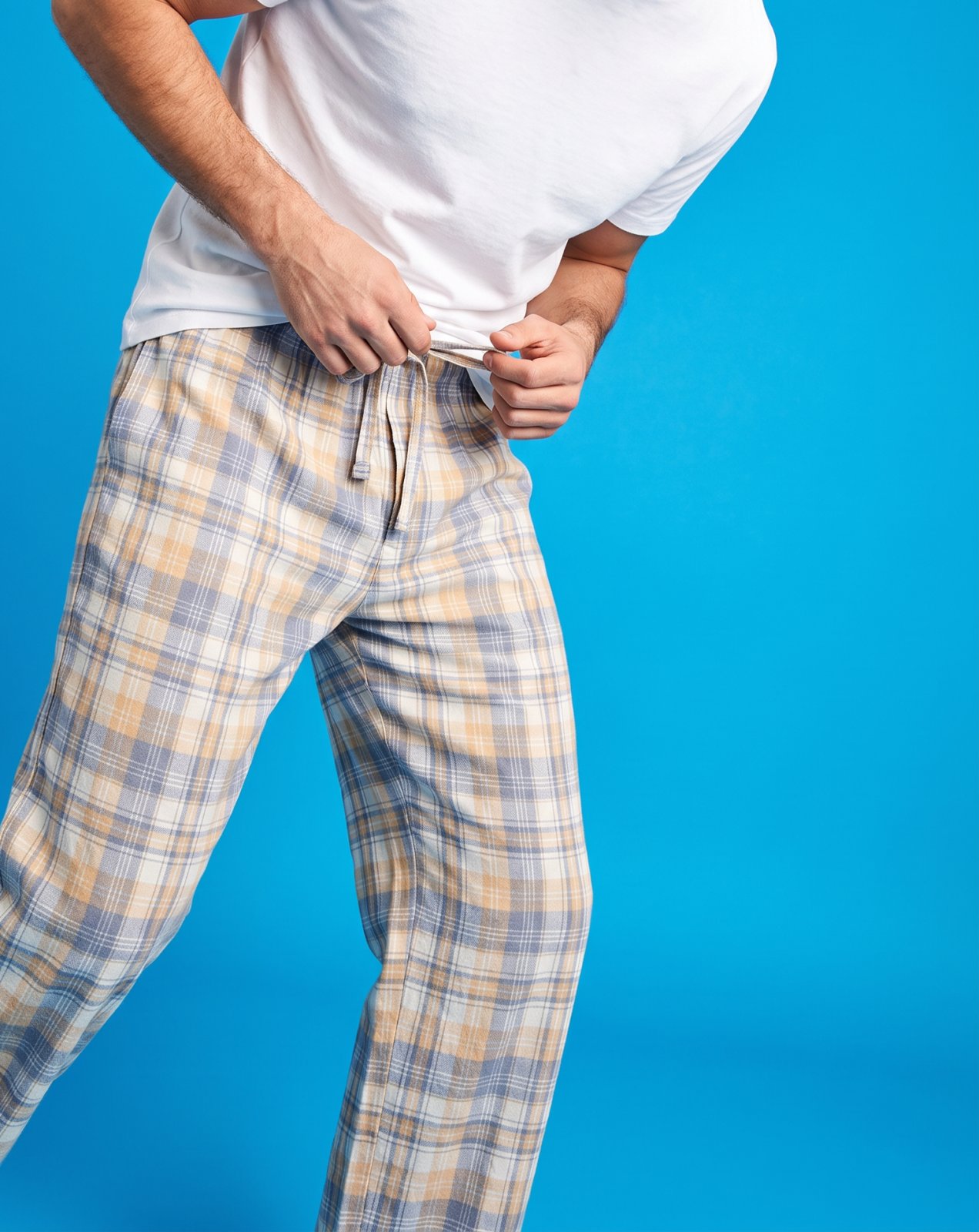
Getting the fit right starts with measuring, not guessing. Check the size guide, measure your waist and hip, and size up if you are between sizes, since pure cotton has no stretch. Our blue and white chequered pyjama pants and gold chequered pyjama pants come in Medium, Large or XL, with an adjustable drawstring waist and side pockets, and are available in 11 other colours. Orders ship from Melbourne, and checking the size guide before you order is a good way to get the right fit.


| What to check | Why it matters | What good looks like |
|---|---|---|
| Fibre content | Determines breathability and how the fabric ages | 100% pure cotton, no harmful additives |
| Certification | Backs up any organic or safety claim | Named certifying body and certificate number |
| Fit allowance | Non-stretch cotton needs room to move | Size up, relaxed cut, adjustable waist |
| Care requirements | Affects how long the garment lasts | Cool wash, line dry, no fabric softener |
| Cost per wear | Shows real value over time | Fewer replacements across several seasons |
Frequently Asked Questions
What should I look for when buying eco-friendly sleepwear online?
Start with the fibre: 100% pure cotton, listed plainly, tells you more than a vague 'natural blend' claim. Then look at the practical details, including sizing notes, care instructions and whether the seller publishes a size guide. A seller who explains what the fabric is and how to wash it is usually a safer buy than one who only shows styled photos.
Is cotton sleepwear breathable enough for warm nights?
Cotton is breathable and moves moisture away from your skin, which is why it works well in heat. The weave matters as much as the fibre: a lighter, looser cotton sleeps cooler than a dense one. Fit matters too, since a relaxed cut lets air circulate. If you overheat easily, choose a loose fit and a lighter colour, and keep the room ventilated. Pure cotton with no stretch, like Sleepy Koala Co's pyjama pants, runs true to size, so sizing up gives a roomier, cooler feel.
What is the difference between organic cotton and regular cotton sleepwear?
The main difference is how the cotton is grown and processed. Organic cotton is grown without synthetic pesticides and processed with restricted chemical inputs, while regular cotton may use both. For sleepwear, that matters if you have sensitive skin or want to reduce chemical exposure next to your body for eight hours a night. Certification is how you verify the claim, so ask the seller which standard applies rather than relying on the word 'organic' alone.
How do I care for cotton sleepwear so it lasts longer?
Wash cotton pyjamas in cool water on a gentle cycle and skip the dryer, since heat shrinks fibres and fades colour. Use a mild detergent and avoid fabric softener, which coats the fibres and reduces breathability. Line dry in shade to protect the colour. Wash pyjamas every two to three wears rather than every night, and rotate between two sets so each one gets a rest.
The challenge with buying sleepwear online is that you cannot feel the fabric before it arrives, which is exactly why fibre and certification details matter more than product photography. Sleepy Koala Co makes pure cotton pyjamas with no harmful additives, ships from Melbourne, and prices them at $30.00 so you can test natural materials without overcommitting. Get started with Sleepy Koala Co and build a sleepwear drawer that actually helps you rest better.
